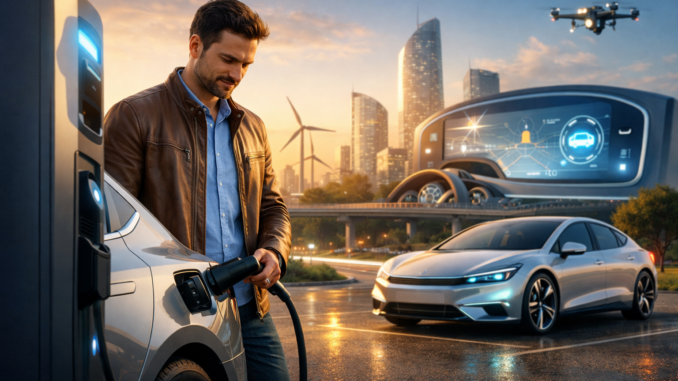
The automotive industry is entering one of the most transformative periods in its history. By 2026, cars are no longer just machines that take us from one place to another—they are becoming smarter, cleaner, safer, and more connected than ever before. Rapid advances in electric vehicle technology, artificial intelligence, and digital connectivity are reshaping what drivers expect from their vehicles.
From electric cars dominating new launches to intelligent features that assist drivers in real time, 2026 is set to redefine the driving experience. In this article, we explore the top automotive trends in 2026 and what drivers should prepare for in the near future.
1. Electric Cars Become the New Normal
Electric vehicles (EVs) are no longer a niche product. In 2026, electric cars are becoming mainstream across many global markets. Governments continue to introduce stricter emission regulations, while manufacturers invest heavily in EV development to meet both environmental goals and consumer demand.
Improved Battery Technology
One of the biggest breakthroughs driving EV adoption is battery innovation. New battery chemistries offer:
- Longer driving ranges (400–600 km on a single charge)
- Faster charging times
- Longer battery lifespan
- Improved safety and thermal management
Solid-state batteries, though still limited in production, are beginning to appear in premium models and are expected to expand further in the coming years.
Lower Costs and Wider Choices
The cost of electric vehicles is steadily decreasing due to mass production and improved supply chains. In 2026, drivers can choose from a wide range of electric options, including:
- Affordable compact EVs
- Electric SUVs and crossovers
- High-performance electric sports cars
- Electric pickup trucks
As EV prices become more competitive with gasoline cars, more drivers are making the switch.
2. Expansion of Charging Infrastructure
Charging anxiety has long been a concern for EV owners, but 2026 brings major improvements in charging infrastructure.
Fast and Ultra-Fast Charging Stations
Public charging networks are expanding rapidly, especially along highways and in urban areas. Many new fast-charging stations can provide:
- 80% battery charge in under 20 minutes
- Contactless payment systems
- Real-time availability tracking via mobile apps
This makes long-distance travel in electric cars far more convenient than before.
Home and Smart Charging Solutions
Smart home charging systems are becoming popular among EV owners. These chargers:
- Automatically charge vehicles during off-peak hours
- Integrate with solar panels and home energy systems
- Reduce electricity costs through optimized scheduling
For many drivers, home charging becomes the primary and most convenient way to power their vehicles.
3. Smart Features and AI-Powered Vehicles
Cars in 2026 are smarter than ever, thanks to artificial intelligence and advanced sensors.
Advanced Driver Assistance Systems (ADAS)
Most new vehicles now come equipped with advanced driver assistance features such as:
- Adaptive cruise control
- Lane-keeping assist
- Automatic emergency braking
- Blind-spot detection
These systems use cameras, radar, and AI algorithms to help reduce accidents and improve overall road safety.
Semi-Autonomous Driving
While fully autonomous cars are still under development, semi-autonomous driving features are becoming more reliable. In certain conditions, vehicles can:
- Drive themselves on highways
- Manage stop-and-go traffic
- Park automatically in tight spaces
Drivers are still required to stay alert, but these features significantly reduce driving fatigue.
4. Connected Cars and Digital Ecosystems
Connectivity is a key automotive trend in 2026. Cars are increasingly integrated with digital ecosystems, turning them into mobile smart devices.
Over-the-Air (OTA) Updates
Instead of visiting service centers, drivers can now receive:
- Software updates
- Bug fixes
- New features
Over-the-air updates keep vehicles up to date and improve performance long after purchase.
Seamless Smartphone Integration
Modern vehicles offer advanced smartphone integration, allowing drivers to:
- Control navigation, music, and calls via voice commands
- Mirror apps directly on the car’s display
- Monitor vehicle health through mobile apps
This level of connectivity enhances convenience and personalization.
5. Focus on Sustainability and Eco-Friendly Materials
Sustainability is a major priority for automotive manufacturers in 2026.
Use of Recycled and Sustainable Materials
Many car interiors now use:
- Recycled plastics
- Vegan leather alternatives
- Eco-friendly fabrics
These materials reduce environmental impact without sacrificing comfort or quality.
Carbon-Neutral Manufacturing
Automakers are investing in renewable energy and cleaner manufacturing processes. Some brands aim to achieve carbon-neutral production, reducing emissions across the entire vehicle lifecycle.
6. Enhanced Safety Technologies
Safety remains a top concern for drivers, and 2026 vehicles include more advanced safety features than ever before.
AI-Based Accident Prevention
Modern cars analyze driving patterns and road conditions in real time. AI-powered systems can:
- Warn drivers of potential hazards
- Detect driver fatigue
- Automatically intervene in dangerous situations
These technologies significantly reduce the risk of collisions.
Improved Structural Design
New materials and improved engineering techniques result in:
- Stronger vehicle frames
- Better crash energy absorption
- Enhanced protection for passengers and pedestrians
Safety ratings continue to improve across most vehicle categories.
7. Rise of Software-Defined Vehicles
In 2026, vehicles are increasingly defined by software rather than hardware alone.
Customizable Features
Drivers can unlock features through software, such as:
- Enhanced performance modes
- Advanced navigation systems
- Additional driver assistance tools
Some features are offered via subscriptions, allowing drivers to customize their vehicle experience.
Predictive Maintenance
Software systems monitor vehicle health and notify drivers before issues become serious. This reduces unexpected breakdowns and lowers maintenance costs over time.
8. Changing Ownership Models
Traditional car ownership is evolving as new mobility options emerge.
Subscription-Based Car Services
Car subscriptions allow drivers to:
- Pay a monthly fee instead of buying a car
- Switch between different models
- Avoid long-term commitments
This model appeals especially to urban drivers and younger generations.
Growth of Car-Sharing and Ride Services
Car-sharing platforms and electric ride-hailing services continue to grow, reducing the need for personal vehicle ownership in crowded cities.
9. What Drivers Should Expect in 2026
For drivers, 2026 brings both opportunities and adjustments. Expect:
- More electric and hybrid options on the market
- Higher levels of automation and safety
- Greater focus on software and connectivity
- Increased emphasis on sustainability
Drivers may also need to adapt to new charging habits, software updates, and digital vehicle management systems.
Conclusion
The automotive industry in 2026 is defined by innovation, sustainability, and intelligent technology. Electric cars are becoming the standard, smart features are enhancing safety and convenience, and connectivity is transforming vehicles into advanced digital platforms.
For drivers, this means a cleaner, safer, and more personalized driving experience. Whether you are considering buying a new car or simply keeping up with industry trends, understanding these automotive developments will help you make informed decisions in the years ahead.
As technology continues to evolve, one thing is clear: the future of driving is smarter, greener, and more exciting than ever