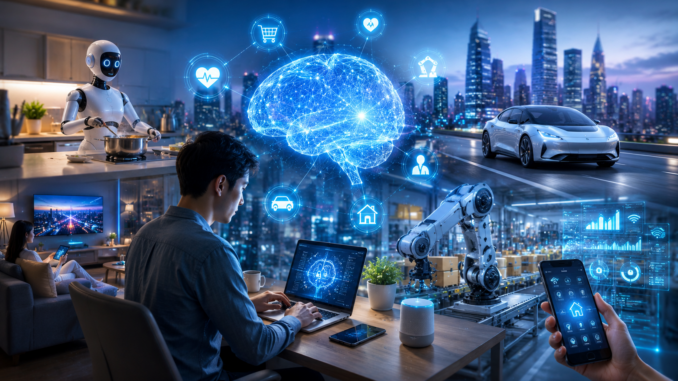
How Artificial Intelligence is Transforming Everyday Life and Business in 2026
Introduction
Artificial Intelligence (AI) has rapidly evolved from a niche area of research into a powerful force shaping the modern world. In 2026, AI is no longer just a technological trend—it is a fundamental part of everyday life and business operations. From personalized digital experiences to advanced automation, AI is transforming how people live, work, and interact with technology.
As industries continue to embrace AI-driven solutions, the impact of this technology is becoming more visible across various sectors. This article explores how Artificial Intelligence is transforming everyday life and business in 2026, highlighting key innovations, real-world applications, and future opportunities.
1. AI in Everyday Life: Making Daily Tasks Smarter
Artificial Intelligence is deeply integrated into daily routines, making everyday tasks more efficient and convenient.
Smart Assistants and Automation
AI-powered virtual assistants have become more intelligent and responsive. These assistants can manage schedules, set reminders, control smart home devices, and even anticipate user needs based on behavior patterns.
Smart homes are now more advanced, with AI controlling lighting, temperature, security systems, and appliances. These systems learn user preferences over time, creating a personalized living environment.
Personalized Digital Experiences
AI is driving personalization across digital platforms. Streaming services, online shopping, and social media platforms use AI algorithms to recommend content tailored to individual preferences.
For example, AI analyzes user behavior to suggest movies, products, and articles, enhancing the overall user experience. This level of personalization saves time and improves satisfaction.
AI in Healthcare
Healthcare is one of the most impactful areas where AI is making a difference. AI-powered tools are being used for early diagnosis, disease prediction, and personalized treatment plans.
Wearable devices equipped with AI can monitor vital signs and alert users to potential health issues. Telemedicine platforms use AI to assist doctors in diagnosing conditions and recommending treatments.
2. AI in Business: Driving Efficiency and Innovation
Businesses across industries are leveraging AI to streamline operations, improve decision-making, and gain a competitive advantage.
Automation of Repetitive Tasks
One of the most significant benefits of AI in business is automation. Routine tasks such as data entry, customer support, and inventory management are now handled by AI systems.
This automation reduces human error, increases productivity, and allows employees to focus on more strategic activities.
AI in Customer Service
AI-powered chatbots and virtual agents are transforming customer service. These systems provide instant responses to customer inquiries, improving response times and customer satisfaction.
Advanced AI systems can understand natural language, making interactions more human-like and efficient.
Data-Driven Decision Making
AI enables businesses to analyze large volumes of data quickly and accurately. This helps organizations make informed decisions based on real-time insights.
Predictive analytics powered by AI can forecast market trends, customer behavior, and business outcomes, allowing companies to plan more effectively.
3. AI in E-Commerce and Marketing
AI is revolutionizing the way businesses interact with customers in the digital marketplace.
Personalized Marketing Strategies
AI allows businesses to create highly targeted marketing campaigns. By analyzing customer data, AI can identify preferences, behaviors, and buying patterns.
This enables companies to deliver personalized advertisements, emails, and product recommendations, increasing conversion rates and customer engagement.
Dynamic Pricing
AI-powered systems can adjust prices in real time based on demand, competition, and customer behavior. This helps businesses maximize revenue and stay competitive in the market.
Enhanced Customer Experience
AI improves the overall shopping experience by providing personalized recommendations, virtual try-ons, and intelligent search features.
Customers can find products more easily, leading to higher satisfaction and increased sales.
4. AI in Finance and Banking
The financial sector is undergoing a major transformation due to AI technologies.
Fraud Detection and Prevention
AI systems can detect unusual patterns and identify potential fraud in real time. This helps financial institutions protect customers and reduce losses.
Automated Financial Services
AI-powered tools are providing automated financial advice, investment management, and risk assessment. These services are more accessible and cost-effective for users.
Improved Customer Insights
Banks and financial institutions use AI to analyze customer data and provide personalized financial solutions. This enhances customer relationships and improves service quality.
5. AI in Manufacturing and Supply Chain
AI is playing a crucial role in improving efficiency and productivity in manufacturing and supply chain management.
Predictive Maintenance
AI systems can monitor equipment performance and predict potential failures before they occur. This reduces downtime and maintenance costs.
Supply Chain Optimization
AI helps businesses optimize their supply chains by analyzing data and predicting demand. This ensures better inventory management and reduces waste.
Robotics and Automation
AI-powered robots are being used in manufacturing to perform complex tasks with precision and speed. This improves production efficiency and reduces operational costs.
6. AI and the Future of Work
AI is reshaping the workplace, creating new opportunities and challenges.
Job Transformation
While AI is automating certain tasks, it is also creating new job roles that require advanced skills. Workers need to adapt by learning new technologies and developing digital skills.
Remote Work and Collaboration
AI-powered tools are enhancing remote work by improving communication, collaboration, and productivity. Virtual meeting platforms, project management tools, and AI assistants are making remote work more efficient.
Workforce Productivity
AI helps employees work smarter by automating repetitive tasks and providing valuable insights. This increases productivity and allows workers to focus on creative and strategic activities.
7. Ethical Considerations and Challenges
Despite its many benefits, AI also presents challenges that need to be addressed.
Data Privacy and Security
As AI relies heavily on data, ensuring data privacy and security is critical. Organizations must implement strong measures to protect user information.
Bias and Fairness
AI systems can sometimes reflect biases present in the data they are trained on. Ensuring fairness and transparency in AI algorithms is essential.
Regulation and Governance
Governments and organizations are working to establish regulations and guidelines for responsible AI use. This ensures that AI technologies are used ethically and safely.
Conclusion
Artificial Intelligence is transforming everyday life and business in 2026 in profound ways. From enhancing daily convenience to driving business innovation, AI is reshaping the world as we know it.
Businesses that embrace AI technologies can improve efficiency, reduce costs, and gain a competitive edge. At the same time, individuals benefit from personalized experiences, improved healthcare, and smarter living environments.
As AI continues to evolve, it is important to address ethical challenges and ensure responsible use. The future of AI holds immense potential, and its impact will only continue to grow in the years ahead.